
Government Control Polling - Civil Liberties
Poll finds that an overwhelming majority of Brits want less government control over their lives and their money.
New polling of British adults, conducted by Adam Smith Insights, reveals strong public support for less government intervention. According to the nationally representative survey, Brits overwhelmingly oppose nanny state measures, such as banning the advertisement of unhealthy products, and trust themselves over the government to make personal decisions related to their safety, lifestyle choices and finances. The polling also reveals a strong public consensus that the government needs to get out of the way and let small businesses thrive.
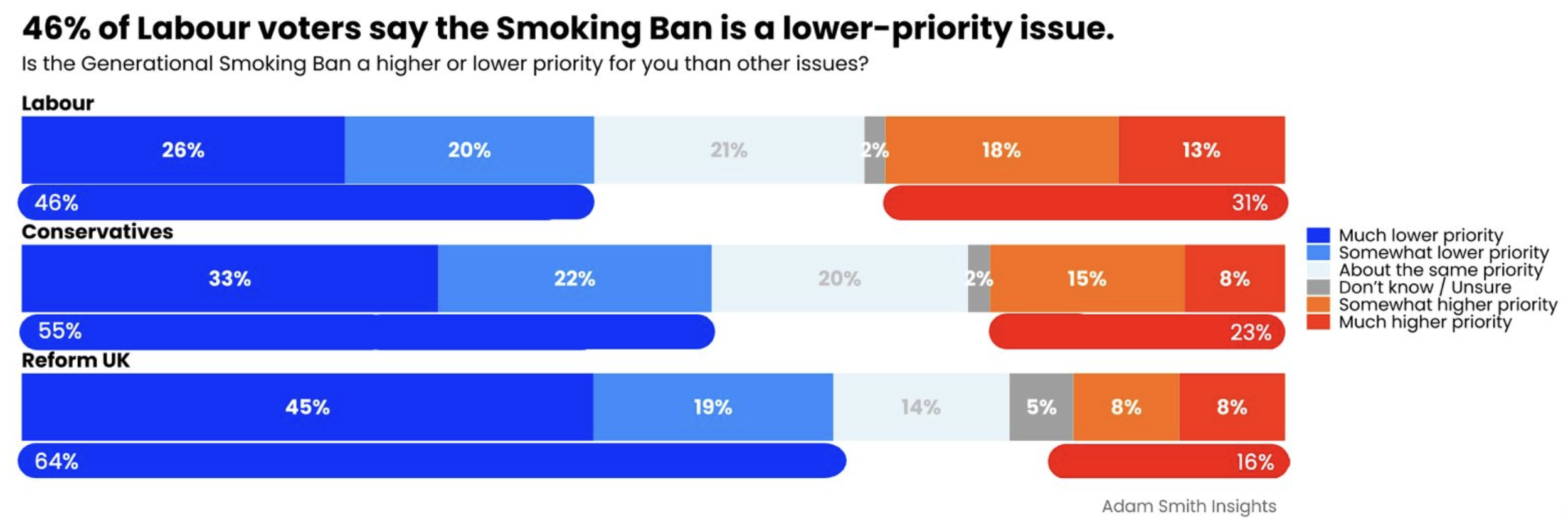
More than half of the public (51%) view the proposed Generational Smoking Ban as a lower-priority issue compared to other concerns like the economy and cost of living.

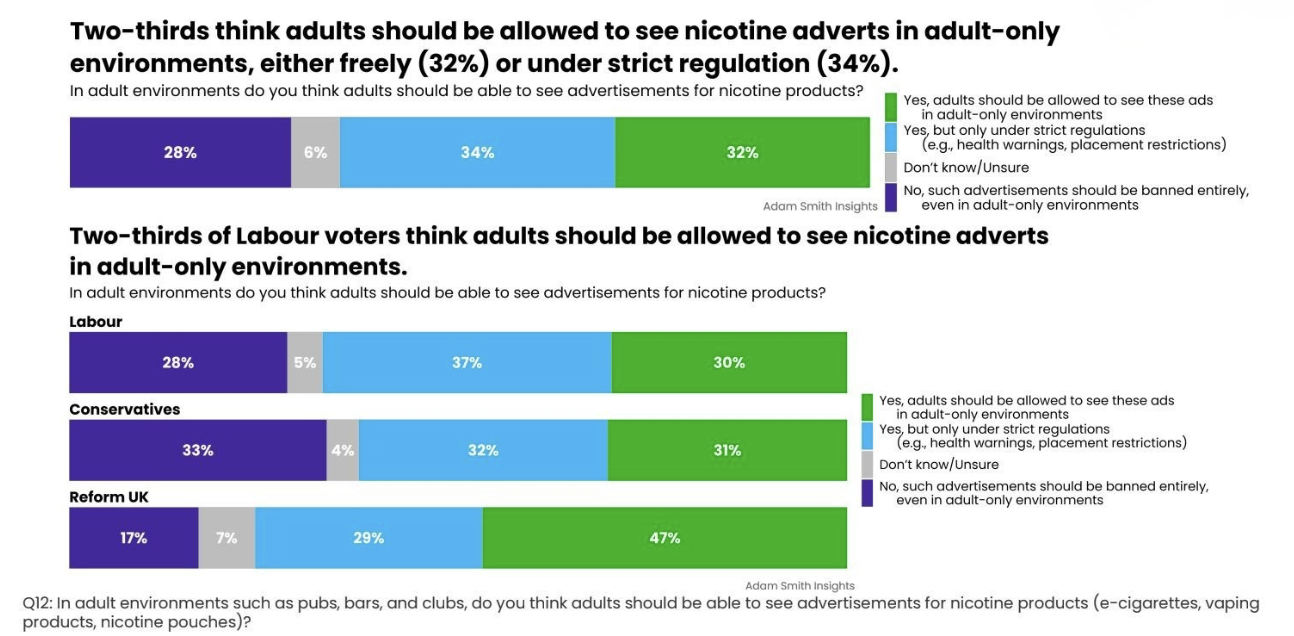
Additionally, a two-thirds majority of adults (66%) believe that nicotine adverts should be permitted in adult-only environments, either freely or under strict regulations.
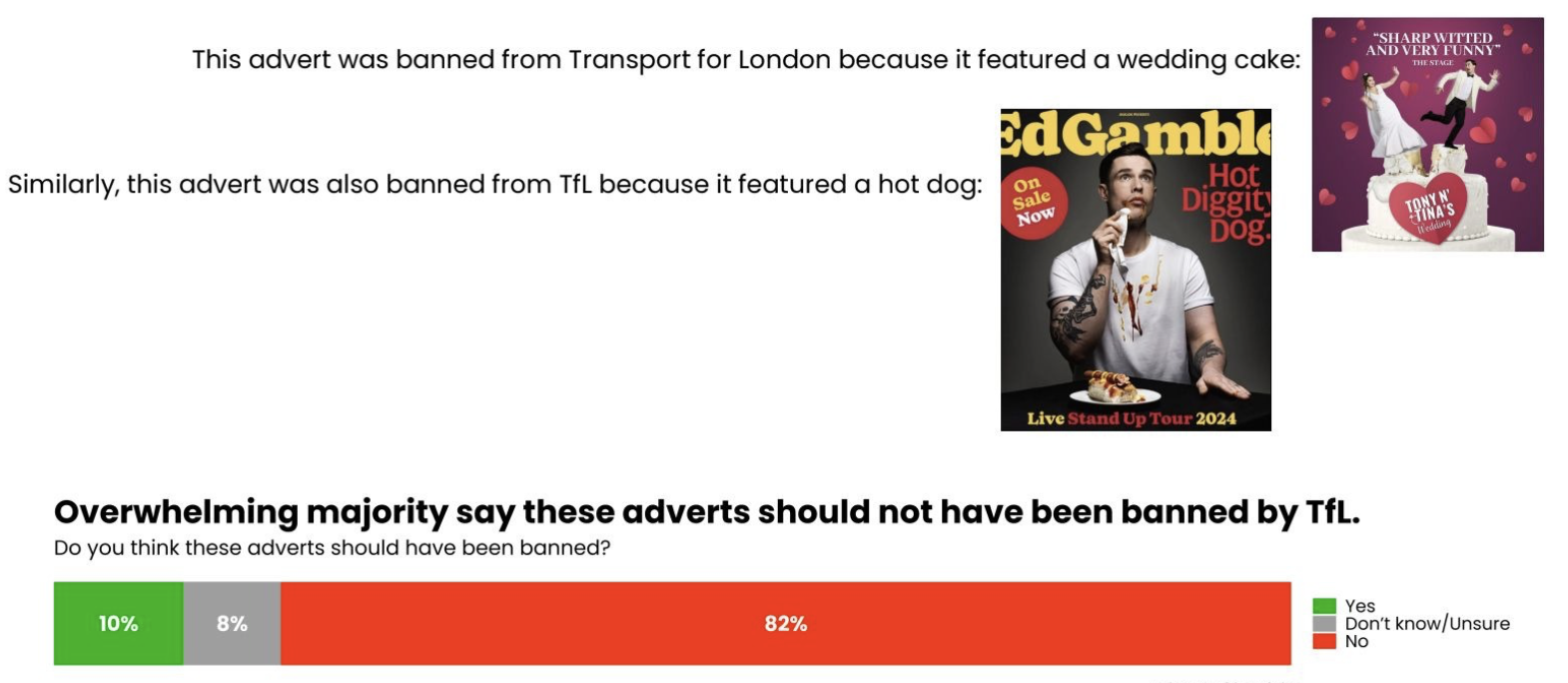
The overwhelming majority of people (82%) also believe that adverts for a wedding cake and a hot dog, which were prohibited over concerns about "unhealthy foods, should not have been banned by Transport for London.
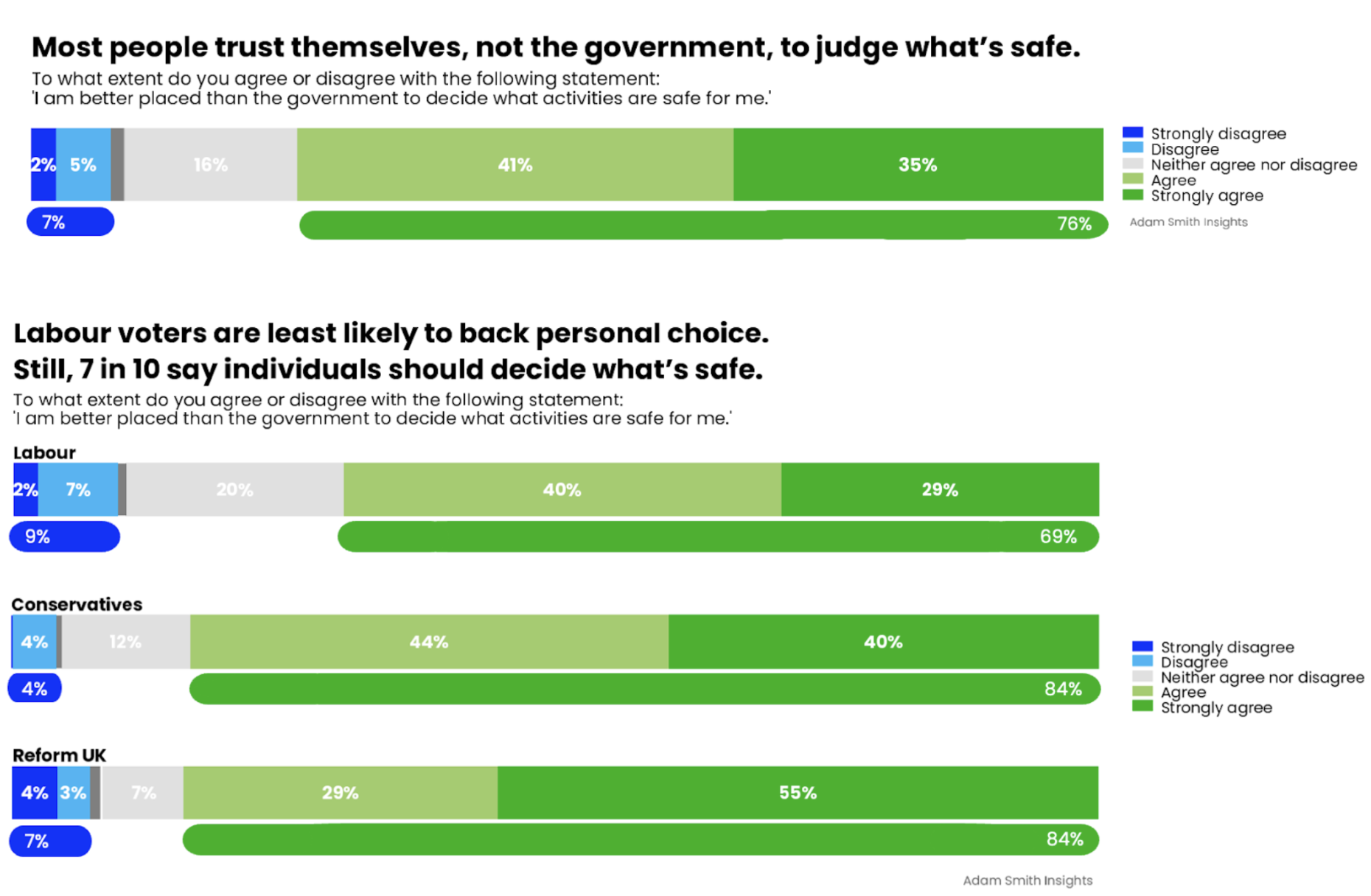
More generally, the vast majority of people believe they, not the government, are best placed to decide what is safe for them. A staggering 77% of those polled said they trust themselves to make these judgments. This view is shared across the political spectrum, with 84% of both Conservative and Reform voters agreeing, and even 7 in 10 Labour voters holding the same opinion.
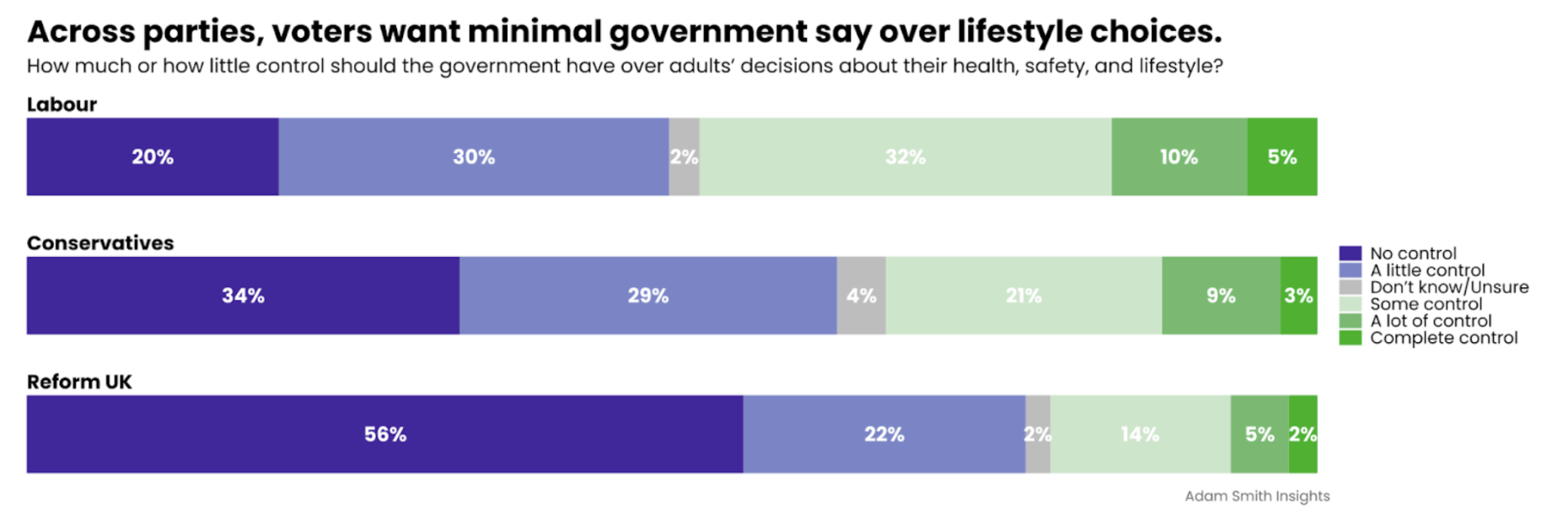
Brits also overwhelmingly reject growing government control over their lifestyle choices. Again, this sentiment is strong across parties, with 50% of Labour voters, 63% of Conservatives, and 78% of Reform voters believing the government should have little or no control over their personal lives.

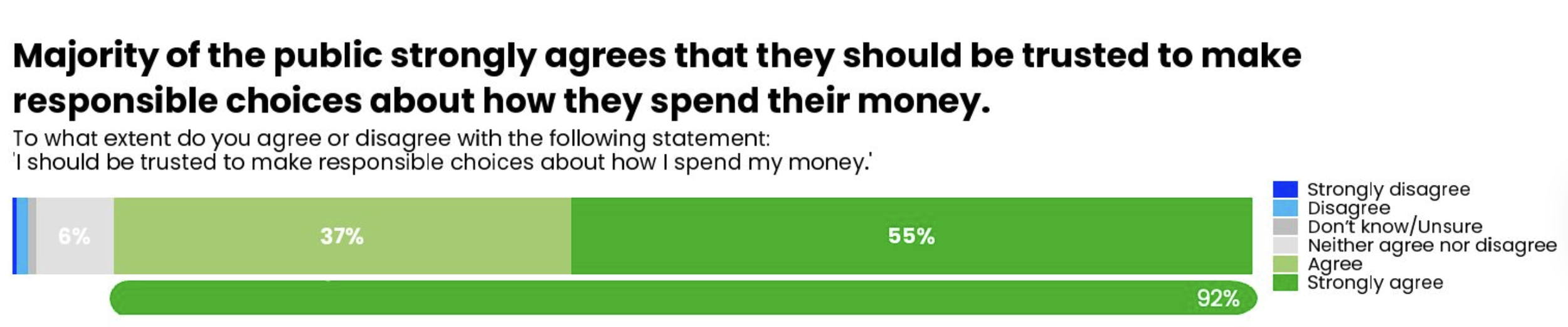
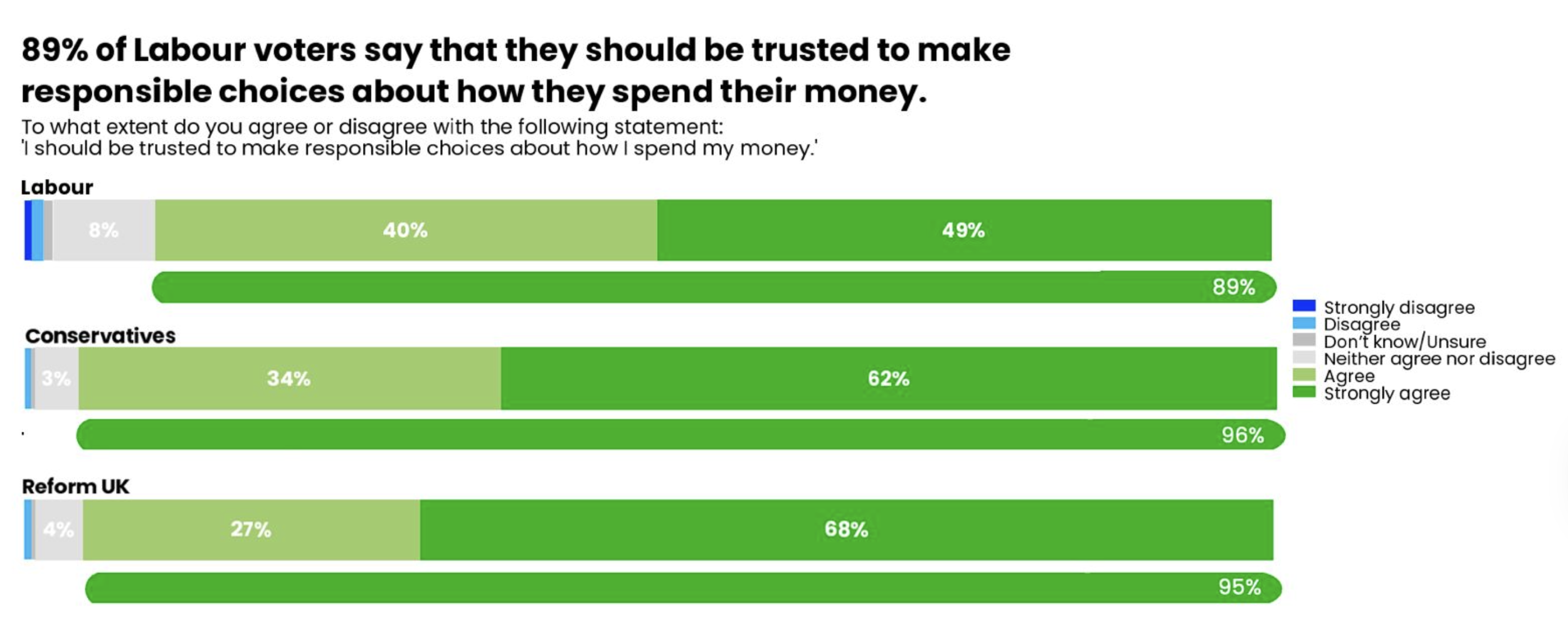
Furthermore, an overwhelming majority of the public believes they should be trusted to make responsible financial decisions. 92% of voters agree that they should be trusted with their own money, with 55% strongly agreeing. This sentiment is consistent across political lines, with 89% of Labour voters and 95% of both Conservative and Reform voters in agreement.
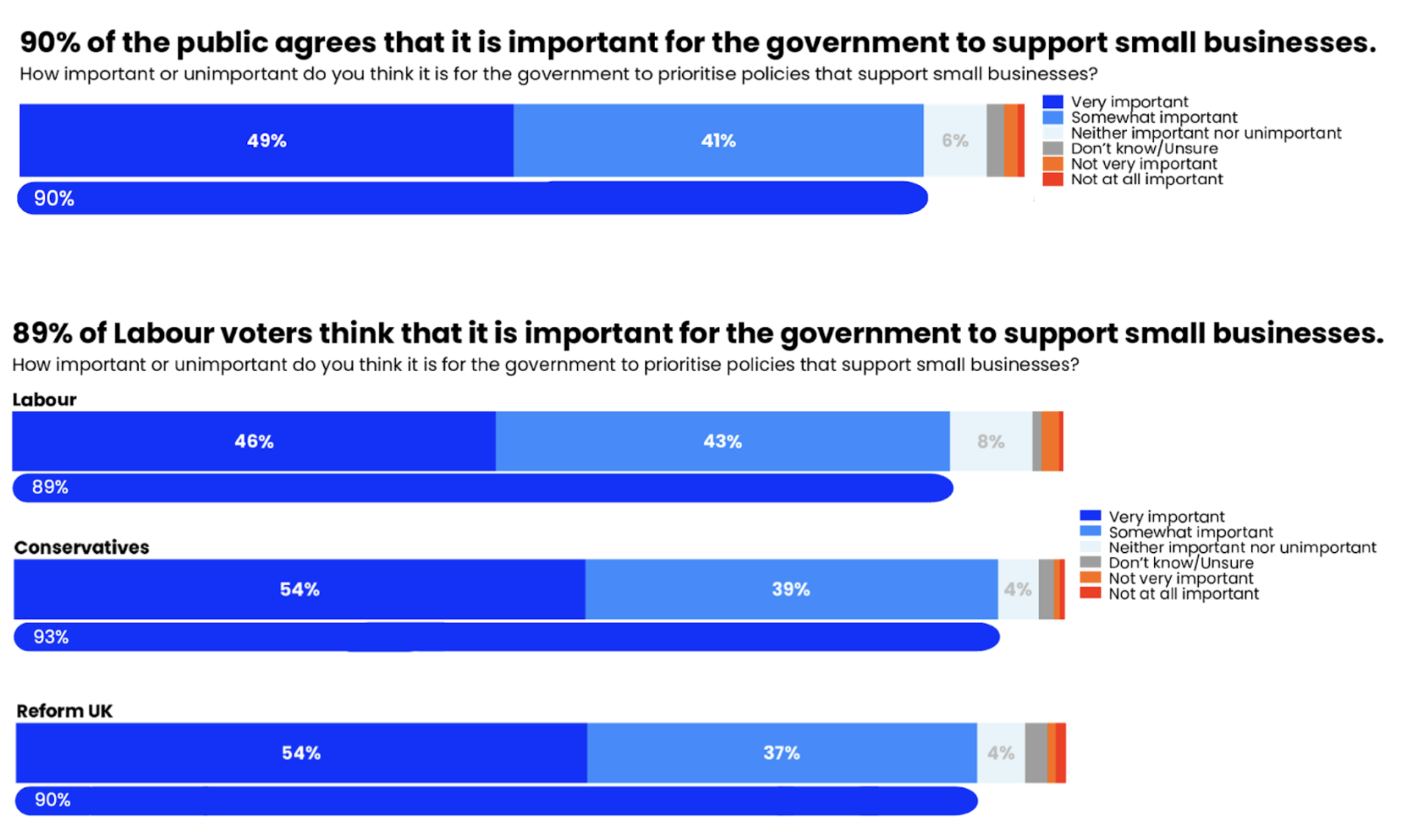
The vast majority of the public (90%) agrees that it is important for the government to prioritise policies that support small businesses. This sentiment is remarkably consistent across party lines, with 89% of Labour voters, 91% of Reform voters, and 93% of Conservative voters all in agreement.
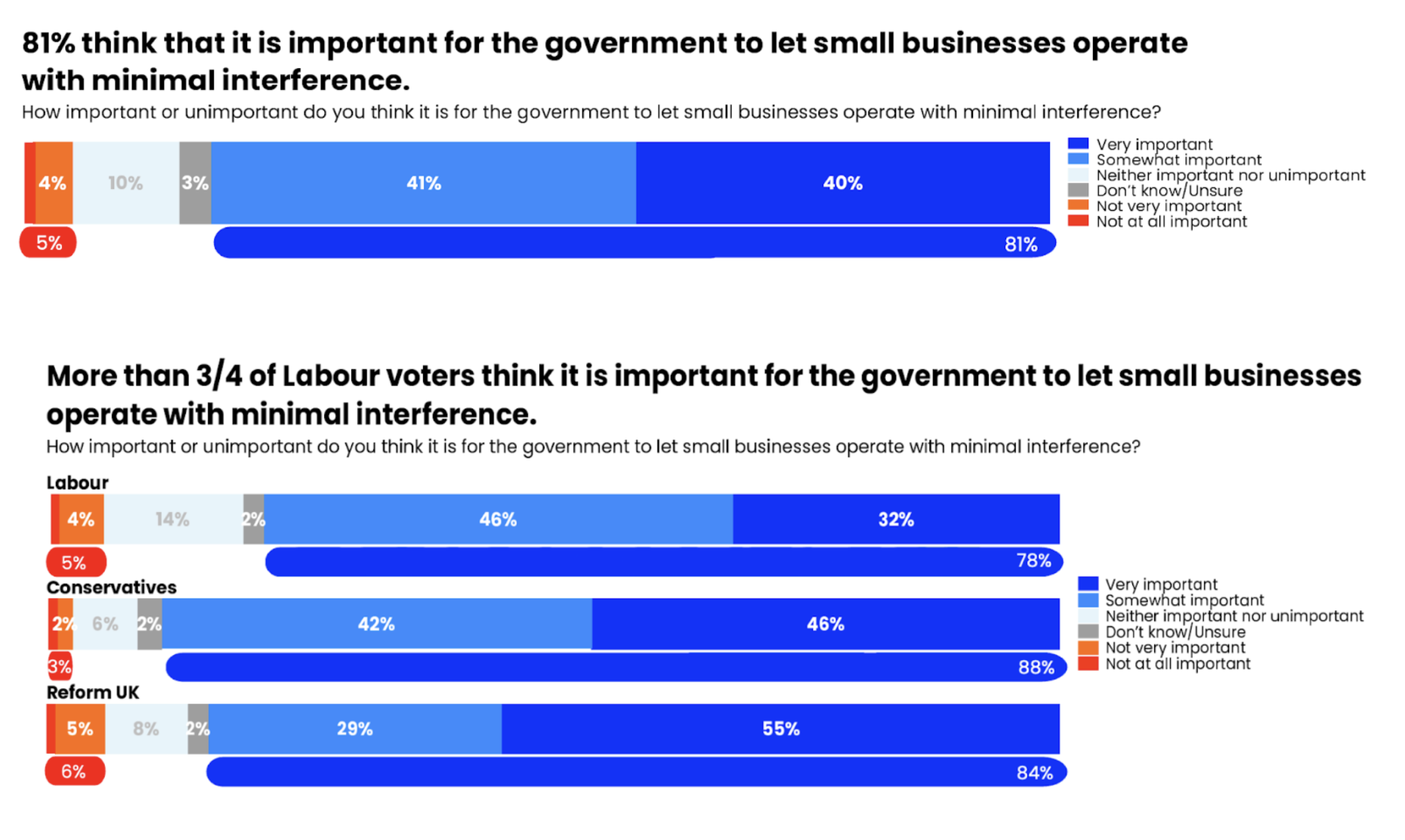
Furthermore, there is overwhelming support for less government interference in the operation of these businesses. A strong 81% of the public thinks it is important for the government to let small businesses operate with minimal intervention. Again, this is a widely held belief, with over three-quarters of Labour voters and an even higher number of Conservative (88%) and Reform (84%) voters sharing this view.
These findings come as successive governments have increasingly intruded into the personal lives of ordinary Brits, implementing a host of authoritarian policies such as the generational smoking ban, the ban on disposable vapes and massively over regulating Adult Gaming Centres (AGCs).
Of course, it's not just civil liberties that are suffering as a result of big state interference. This year, Brits worked for a gruelling 162 days to pay their taxes - the latest Tax Freedom Day since current records began. By 2030, taxation could exceed 50% of the Net National Income. With recent hikes to National Insurance Contributions only compounding the issue, it’s no wonder so many Brits agree that they should be trusted to spend their own money.
The government needs to get out of people's lives and businesses. Policymakers must rethink punitive bans and work to lower taxes, trusting the public to make responsible choices for themselves and their families. Brits must be able to thrive and build their own futures without fear of government overreach.
KEY FINDINGS:
The majority of voters view the proposed Generational Smoking Ban as a lower-priority issue.
51% of the public overall say the Generational Smoking Ban is a lower-priority issue (combining "Much lower priority" and "Somewhat lower priority").
This view is shared by all major party voters, though to different degrees. 46% of Labour voters consider it a lower-priority issue compared to 55% of Conservative voters and 64% of Reform UK voters.
A two-thirds majority of adults believe nicotine adverts should be allowed in adult-only environments, either freely or under regulation.
66% of the public overall think adults should be able to see nicotine adverts in adult-only environments.
28% of the public think such advertisements should be banned entirely, even in adult-only environments.
The majority of voters across the three parties support allowing the adverts, with Reform UK voters showing the strongest support for minimal intervention.
The overwhelming majority of people believe adverts for "unhealthy foods" should not be banned by TfL.
82% of people say the banned adverts for a wedding cake and a hot dog should not have been banned by Transport for London (TfL).
Only 10% of people think the adverts should have been banned.
Most people trust themselves not the government to decide what's safe
77% of people trust themselves, not the government, to judge what’s safe.
84% of both Conservative and Reform voters, and 70% of Labour voters, believe individuals are better placed than the government to decide what activities are safe for them.
Most reject the government having much control over their lifestyle choices
59% of voters reject the government having much control over their lifestyle choices.
50% of Labour voters, 63% of Conservatives, and 78% of Reform voters think the government should have little or no control over their lifestyle choices.
Majority of the public strongly agrees they should be trusted to make responsible choices about how they spend their money
92% of voters agree or strongly agree that they should be trusted to make responsible choices about their spending.
55% of voters strongly agree.
90% of the public agree that it is important for the government to prioritise policies that support small businesses.
89% of Labour voters think that it is important for the government to support small businesses.
This rises to 91% for Reform voters and 93% for Conservative voters.
81% think it's important for the government to let small businesses operate with minimal government interference.
Over ¾ of Labour voters think it's important for the government to let small businesses operate with minimal government interference.
88% of Conservative voters and 84% of Reform voters think it's important for the government to let small businesses operate with minimal government interference.
Methodology:
Adam Smith Insights polled a nationally representative sample of adults in Great Britain for British American Tobacco.
With fieldwork dates of 12th to 20th September 2025, the poll has a sample size of 2,065 GB adults.
The sample was collected using online panels.
Poll is weighted to population targets to match GB adult population profile across age, gender, region, ethnicity, and 2024 general election vote.
Population targets were based on ONS 2021 UK Census data, age-by-vote distributions derived from Ipsos’s post-election analysis: “How Britain voted in the 2024 election”, national vote share data from the Electoral Reform Society’s 2024 general election results, and YouGov/BES polling.
Respondents were filtered for completion quality (e.g., speeding), and responses with incomplete or invalid data were excluded from analysis.
No imputation was applied.
The poll, with a median completion time of approximately 5.6 minutes, has a margin of error of ±2.2%
Adam Smith Insights is a new type of data and polling organisation, with a special focus on economics and policy change. Through analysis of public sentiment, we reshape what is politically possible. We help construct reforms which will be more popular and successful, while exposing the failings of our current system. Through a range of quantitative and qualitative methods, we equip policy makers with the right insights to shift the agenda and change reality. We operate globally, with data and analysis covering all regions.