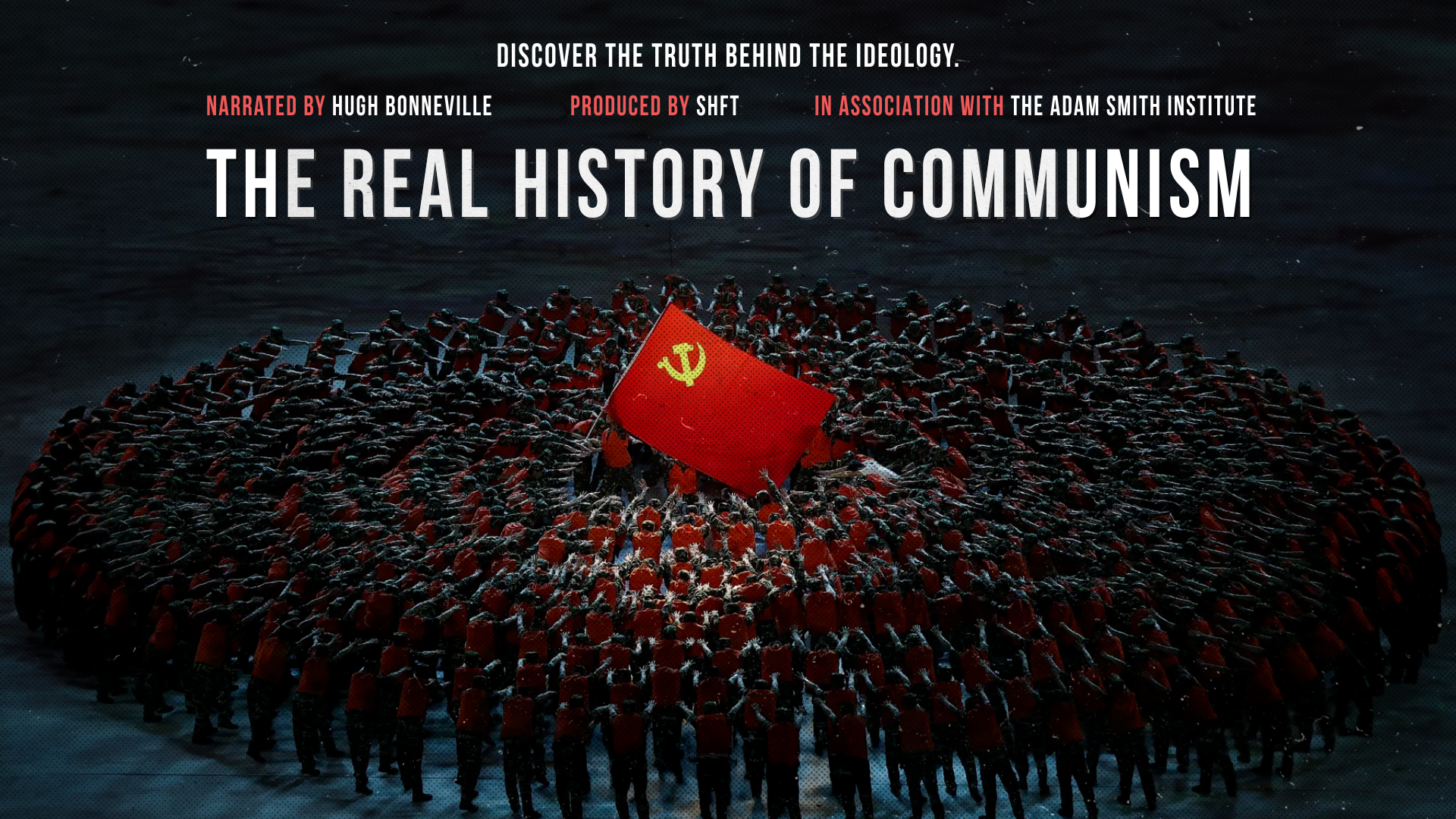
The Real History of Communism

This two-part documentary series offers a definitive exploration of the Soviet Union, from its ideological origins and systemic expansion to its eventual fragmentation. Moving beyond basic chronologies, these curated clips analyse the profound tension between Marxist theory and the brutal reality of its implementation.

From the architectural repression of the Berlin Wall to the systemic failures exposed by the Chornobyl disaster, these materials are designed to help students critically evaluate the nature of government, the mechanics of command economies, and the human cost of totalitarian control.

Educational Resources

To support classroom learning, we have identified specific segments that align directly with key modules in the History GCSE and A-level curricula. We have identified certain modules for which these clips are relevant. However, our categorisation is not exhaustive, and videos can be used for other modules.

Skip to Videos
  • The Cultural Revolution
    17/02/2026

    The Cultural Revolution

    China’s Cultural Revolution (1966–76): Ideology, mass mobilisation, Red Guards and the campaign against the “Four Olds”, plus evaluation of Mao’s cult of personality. Relevant for GCSE & A Level History.

  • The Great Famine
    17/02/2026

    The Great Famine

    Consequences of collectivisation: evidence on the impact of forced agricultural change in the USSR and links to Lysenkoism and agrarian science under Stalin. Relevant for A Level History (AQA/Edexcel).

  • Mao's First Five Year Plan & The Great Leap Forward
    • 17/02/2026

    Mao's First Five Year Plan & The Great Leap Forward

    Mao’s First Five-Year Plan and the Great Leap Forward: contrasting the relative success of China’s early Soviet-style industrialisation with the ideological drive and outcomes of the Great Leap Forward. Relevant for GCSE & A Level History.

  • Consolidation of Mao's Power
    • 17/02/2026

    Consolidation of Mao's Power

    Consolidation of Mao Zedong’s power after 1949: early power struggles, political campaigns and purges that secured CCP control—essential for essays on how Mao stayed in power. Relevant for GCSE & A Level History.

  • Gorbachev & The End of History
    • 13/02/2026

    Gorbachev & The End of History

    Gorbachev & the end of history: 1989–1991 summary of Glasnost, Perestroika and the August Coup leading to the collapse of the Soviet Union — ideal conclusion for Cold War courses. Relevant for GCSE & A Level History.

  • The Brezhnev Stagnation
    • 13/02/2026

    The Brezhnev Stagnation

    The Brezhnev “Era of Stagnation” (1964–85): explains economic and political stagnation under Brezhnev, lack of innovation, the shadow economy and structural decay in the USSR — vital for the 1953–1985 government breadth study and essay questions. Relevant for A Level History (Edexcel).

  • The Berlin Wall
    • 13/02/2026

    The Berlin Wall

    The Berlin Wall: Cold War relations, the “Brain Drain” from East Germany and the Wall as a physical symbol of ideological division and Communist insecurity. Relevant for GCSE History (AQA & Edexcel).

  • Terror
    • 13/02/2026

    Terror

    Terror and control under Stalin: how the NKVD/KGB, purges, show trials and surveillance maintained order in the USSR — ideal for GCSE questions on “How did Stalin keep control?” Relevant for GCSE History.

  • Holodomyr
    • 13/02/2026

    Holodomyr

    The Holodomor: a harrowing case study of the human cost of collectivisation and forced agricultural reform in Stalin’s USSR — crucial for essays on social and economic developments under Stalin. Relevant for A Level History.

  • The Gulag
    • 13/02/2026

    The Gulag

    Repression under Stalin: moves beyond “prison” to examine the Gulag system as an economic instrument of state control — essential for evaluating the nature of Soviet government. Relevant for A Level History (AQA & OCR).

  • Stalin's Command Economy
    • 13/02/2026

    Stalin's Command Economy

    Stalin’s Command Economy: industrial modernisation through central planning, Five-Year Plans and state control — ideal for comparing “Tsarist backwardness” with Communist industrial targets and outcomes. Relevant for GCSE and A Level History.

  • Lenin's Consolidation of Power
    • 13/02/2026

    Lenin's Consolidation of Power

    Lenin’s Consolidation of Power: the 1917 Revolutions, the Bolshevik seizure of power and the early decrees on “Peace, Bread and Land” — essential for understanding how the new Communist regime was established. Relevant for GCSE History (AQA & Edexcel).

  • Communist Ideology
    • 29/08/2025

    Communist Ideology

    Ideology: defining the “stages” of communism — from Marxist theory to Leninist adaptation — essential for A Level essays assessing the role of ideology in shaping the Soviet state. Relevant for A Level History.

The Real History of Communism

The Real History of Communism is available to watch online in full.